How to Vet Commercial Plumbing Contractors for Tenant Buildouts
A low bid can hide missing permits, shutdown costs or work the landlord expects you to cover. Use this tenant-buildout checklist to verify credentials, compare complete scopes and protect your opening date.
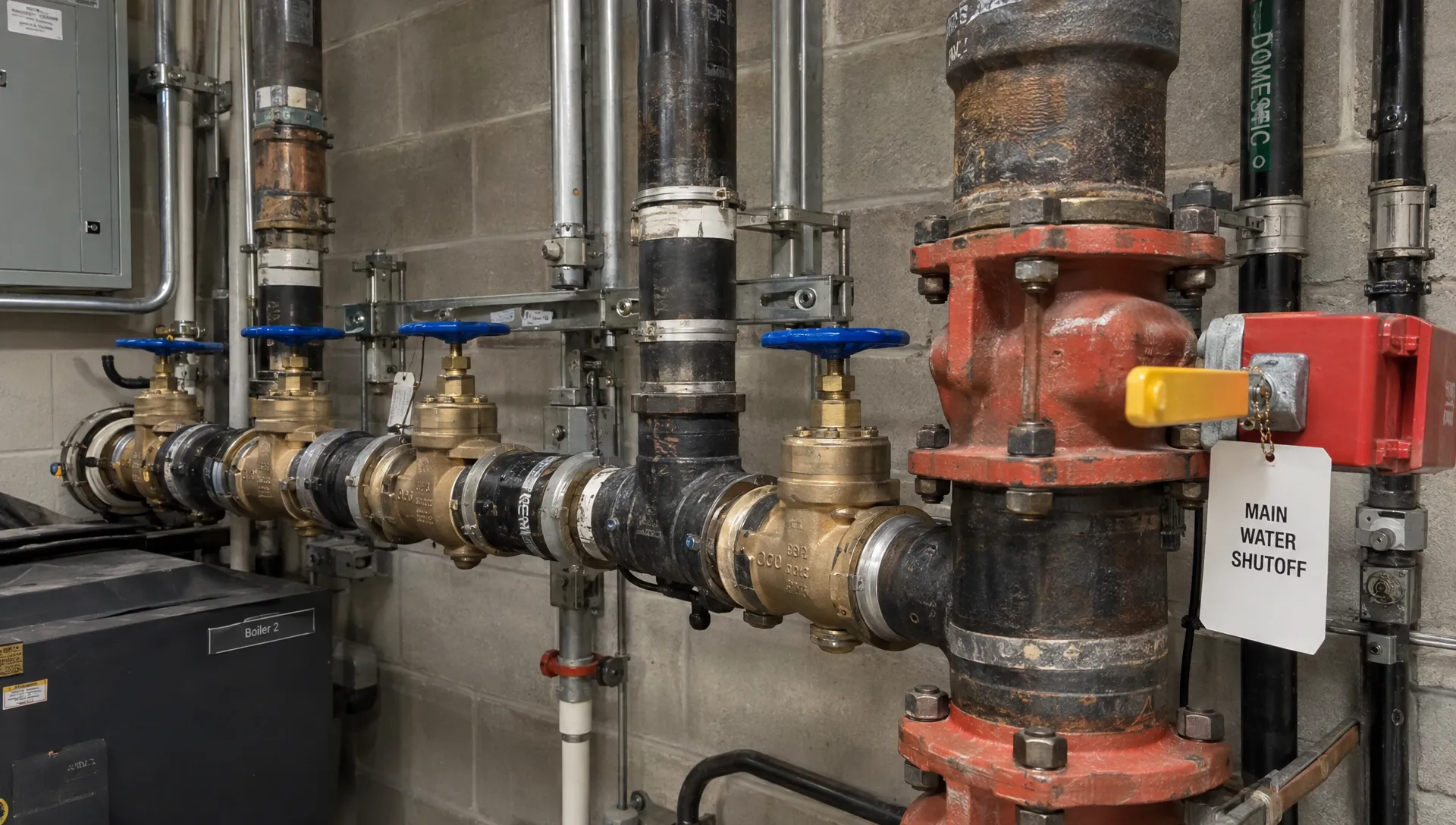
Choosing commercial plumbing contractors for a tenant buildout takes more than checking a license and comparing prices. A proposal can look complete while leaving out slab repairs, shared-building shutdowns or the inspections needed before you can open. Those omissions become expensive once demolition starts and other trades are waiting.
For tenants, property managers and general contractors in Chula Vista and San Diego County, the goal is to hire a contractor whose scope matches the lease, approved plans and building conditions. Use the following checks to separate a workable proposal from a low number built on assumptions.
Define the buildout before requesting bids
Start with a short project brief that every bidder receives. Include the intended business use, available drawings, fixture and equipment schedules, landlord requirements and target opening date. Identify which details are approved and which are still being designed.
The lease’s tenant-improvement provisions or landlord work letter should help establish responsibility for base-building systems. Do not assume that a drain beneath your suite serves only your space or that the landlord will pay for an undersized existing connection.
Your bid package should identify:
- Scope boundaries: Tenant work, landlord work and work by other trades.
- Operating constraints: Occupied neighboring suites, restricted access and permitted construction hours.
- Known system information: Existing water, sewer, gas and hot-water connections, where applicable.
- Decision authority: Who approves substitutions, changes, shutdowns and added costs.
A shared brief makes proposals easier to compare and reduces the chance that each bidder prices a different project.
How to verify commercial plumbing contractors before shortlisting
Check the contracting business, not just a license number
For California plumbing work, verify the appropriate contractor classification, commonly C-36 for plumbing, through the California Contractors State License Board’s license lookup. Match the legal business name and license number to the proposal rather than accepting a screenshot alone.
Review the license status, classification, listed bond and workers’ compensation information, along with publicly available disciplinary disclosures. Ask who will supervise the installation and whether subcontractors will perform any portion of the work. A license establishes a qualification threshold, but it does not prove experience with your particular buildout.
Verify insurance against the project requirements
Request evidence of general liability and applicable workers’ compensation coverage. Have your general contractor, property manager or insurance adviser compare the coverage with the lease and construction contract requirements.
A certificate of insurance summarizes coverage; it does not itself create additional-insured status. If the contract requires additional-insured endorsements, obtain and review those documents too. Confirm coverage dates and the insured business name. A contractor’s license bond is not a substitute for liability insurance, and neither document should be treated as proof that every potential loss is covered.
Test experience against the intended tenant use
Ask commercial plumbing contractors for examples that resemble your project’s use, complexity and occupancy constraints. A successful office restroom refresh does not demonstrate the same capabilities as a restaurant kitchen with grease-management requirements and multiple equipment connections.
Request two or three relevant references and ask specific questions: Did the contractor identify missing scope before construction? Were shutdowns coordinated with the building? Were failed inspections corrected promptly? How were unexpected underground conditions documented and priced?
Discuss the systems your business actually needs. A restaurant may require coordination around grease interceptors, indirect waste connections and hot-water demand. A salon may introduce multiple simultaneous hot-water loads. An office conversion may require revised restroom layouts or accessible fixture placement.
Ask who is responsible for calculations, engineered details and plan revisions. The plumbing contractor should understand the design, but responsibilities for design and professional approvals must be explicit. A promise to “figure it out in the field” is not an adequate answer when permit approval or equipment performance depends on unresolved details.
Require a written review of existing conditions
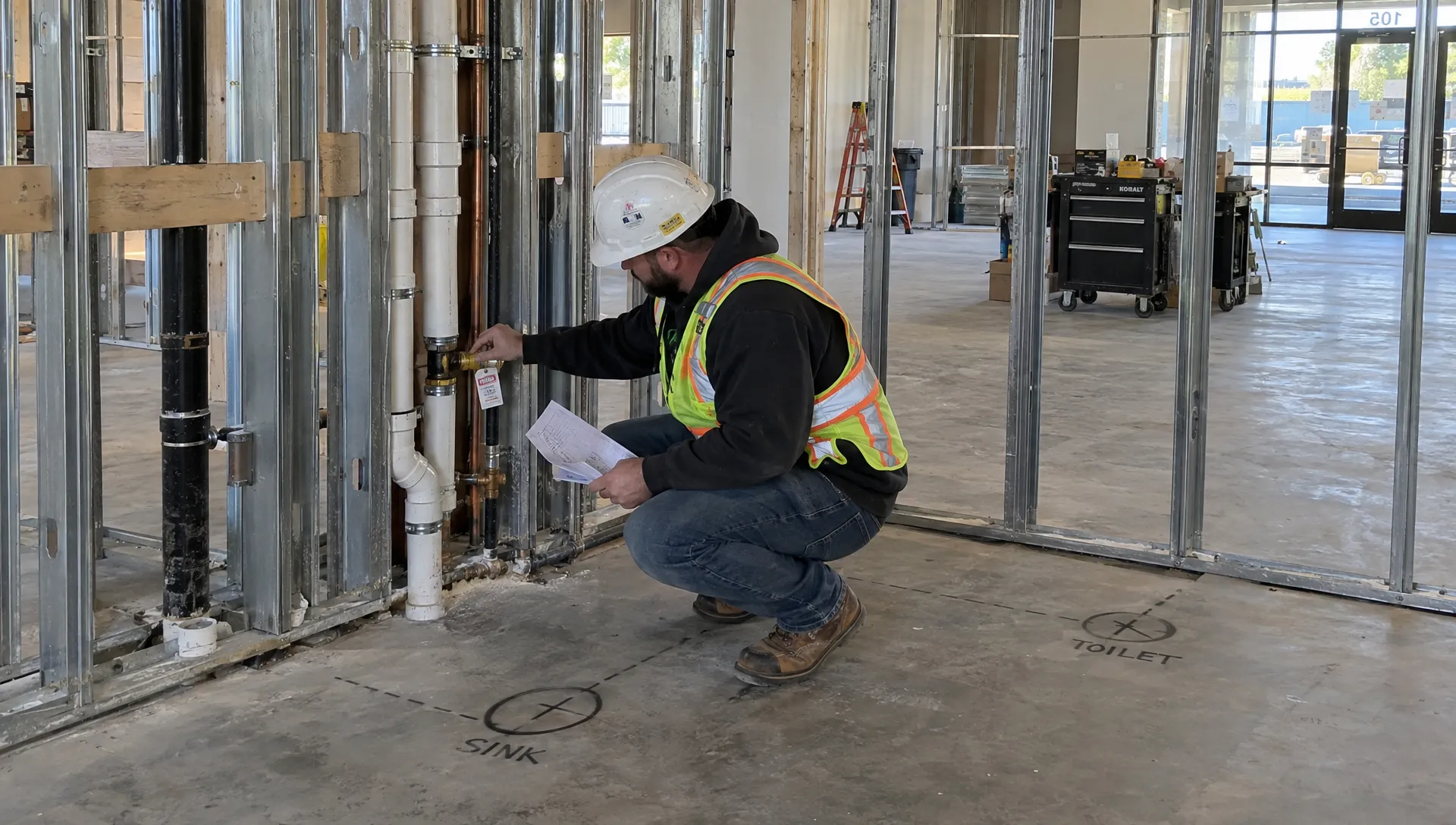
Before committing to a final price, ask commercial plumbing contractors to explain which existing conditions they have verified and which remain assumptions. Tenant spaces often have undocumented alterations, abandoned piping or shared connections that drawings do not fully capture.
A useful site review considers accessible shutoff valves, connection locations, pipe condition, available pressure and the relationship between proposed fixtures and existing drainage. Where underground work is involved, discuss drain routing, elevations and whether further investigation is needed. A sewer camera can help reveal visible condition and routing, but it does not establish that a system has adequate capacity for the proposed use.
For slab penetrations or trenching, identify who arranges scanning, structural review and approval where required. Do not let a plumbing proposal silently assign those responsibilities to someone else.
Ask for a brief assumptions log with each unresolved item, its potential impact and the next step needed to resolve it. For example: “Existing sewer connection elevation not verified; confirm before finalizing below-slab layout.” That is more useful than a broad exclusion for all unforeseen conditions, because it gives the project team something specific to investigate.
Compare bids using the same scope checklist
The most useful bids from commercial plumbing contractors make inclusions, exclusions and allowances easy to locate. Compare scope before comparing totals. If one contractor includes concrete restoration and another stops after backfilling a trench, the prices are not directly comparable.
| Bid item | What the proposal should clarify |
|---|---|
| Installation scope | Fixture quantities, connection points, piping materials and equipment responsibilities |
| Demolition and access | Removal, cutting, excavation, scanning and protection of occupied areas |
| Restoration | Responsibility for concrete, waterproofing, walls, ceilings and finishes |
| Permits and inspections | Who applies, pays fees, schedules inspections and corrects installation deficiencies |
| Testing and startup | Required tests, equipment startup and responsibility for any backflow testing |
| Allowances and exclusions | What remains unverified, how allowances are reconciled and how added work is priced |
| Schedule and closeout | Work phases, shutdown assumptions, documentation and warranty terms |
Ask bidders to revise unclear proposals rather than relying on verbal assurances. The same hidden costs found in pipe repair estimates, such as access work, restoration and testing, can also distort a buildout comparison.
For changes, establish a written process: document the condition, describe the proposed solution and obtain authorization before proceeding, except where immediate protective action is necessary. Payment milestones should correspond to defined work or procurement obligations. A low initial bid becomes less attractive when essential work is left to undefined change orders.
Put shutdowns and inspection checkpoints in writing
Ask commercial plumbing contractors to submit a work sequence that accounts for building operations, not just installation time. A shutdown affecting neighboring tenants may require landlord approval, advance notices and a limited work window. Confirm who locates and verifies the valves before the scheduled interruption.
For a Chula Vista project, confirm permit responsibilities with the City of Chula Vista. Elsewhere in the county, identify the actual permitting jurisdiction rather than assuming every San Diego County address follows the same process. Ask who will confirm applicable code requirements and any separate utility, fire or food-facility approvals relevant to the project.
The schedule should distinguish installation milestones from approval milestones. Rough-in completion is not the same as permission to conceal piping, and finished fixtures do not automatically mean the space is cleared for occupancy.
Also ask what happens if a connection fails during an evening shutdown. Identify the escalation contact, available response arrangements, temporary protective measures and who authorizes emergency spending. Do not equate an advertised emergency service with guaranteed overnight staffing. Get any after-hours commitment in writing, including its geographic limits, availability and charges.
Resolve hazardous-material questions before demolition
Renovation can expose pipe insulation, flooring, adhesives or other materials that require assessment before disturbance. Building age and appearance alone cannot establish whether a material contains asbestos. If suspect materials may be affected, arrange evaluation by a qualified professional before drilling, cutting or removal begins.
The plumbing contractor should explain its stop-work and notification process, not promise to remove unidentified material as ordinary demolition. Where abatement is necessary, define the handoff between the assessment professional, abatement contractor and plumbing crew.
A separate checklist for choosing a licensed asbestos abatement contractor can help you evaluate credentials, insurance, written scopes and required clearance documentation. Verify California and local requirements independently for your project.
Assign responsibility for any required notifications, containment, clearance and disposal records before work starts. The project schedule should account for these steps rather than treating them as an unexpected delay after the space has already been opened up.
Review warranty and handover requirements before award
When comparing commercial plumbing contractors, ask what happens after the installation passes inspection. The contract should distinguish the contractor’s workmanship warranty from manufacturers’ equipment warranties and explain how to request service.
Confirm the start date, duration, covered labor, exclusions and any diagnostic or after-hours charges. If a covered repair requires opening a finished wall, establish who pays for access and restoration. These distinctions are central to what plumbing repair warranties should cover, and they matter just as much in a newly finished tenant space.
Agree on closeout deliverables before signing. Depending on the scope, these may include inspection approvals, test records, equipment manuals, warranty documents, marked-up routing drawings and a labeled shutoff-valve schedule. Ask for photographs of concealed work where useful and permitted.
Finally, have the contractor identify maintenance tasks tied to installed assets, such as water heaters, grease interceptors or backflow assemblies. Any proposed maintenance plan should state tasks, frequency, documentation and exclusions. Keep that offer separate from the construction warranty so you can evaluate each on its own terms.
Frequently asked questions
Can the lowest bidder still be the right choice? Yes, if the bid covers the same work, uses acceptable materials and meets the project’s qualification and scheduling requirements. Ask commercial plumbing contractors to resolve scope differences in writing before deciding that one proposal offers better value.
Who should obtain the plumbing permit? The contract should name the responsible party for applications, fees, inspection scheduling and corrections. Confirm that arrangement with the permitting authority and general contractor. Avoid signing an agreement that simply says “permits by others” without identifying who those others are.
Should I require a fixed price before demolition? Seek a defined price for work that can be reasonably established, with clear assumptions for concealed conditions. Targeted investigation may reduce uncertainty. Where conditions remain unknown, require a documented pricing and approval process rather than an unrestricted allowance for additional work.
What should disqualify a bidder? Unverifiable licensing, unresolved insurance requirements, refusal to provide a written scope or pressure to bypass required permits are reasons to stop the selection process. Missing credentials should not be offset by a lower price or an earlier promised start date.
Discuss your tenant-buildout scope with Hydro Hero Plumbing
Hydro Hero Plumbing serves residential and commercial customers across Chula Vista and San Diego County, with upfront pricing and free estimates. To discuss your project, call (619) 289-0874 or contact Hydro Hero Plumbing.
Have your drawings, landlord requirements and proposed schedule ready. Confirm project fit, permit responsibilities and availability for any required shutdown windows before moving forward.
Isaac Cruz
Owner & Master Plumber | C-36 Licensed | 20+ Years Experience
Isaac Cruz is the owner and founder of Hydro Hero Plumbing. A second-generation plumber with over 20 years of hands-on experience in Chula Vista and San Diego County, Isaac holds an active C-36 California plumbing contractor license and has personally overseen thousands of plumbing jobs throughout the South Bay. He started Hydro Hero Plumbing with one goal: to give Chula Vista homeowners an honest, reliable local plumber they could actually trust.
Call Isaac's Team: (619) 289-0874Need a Plumber in Chula Vista?
Licensed C-36, owner-operated, and upfront pricing on every job. Same-day service across Chula Vista and San Diego County.
Call (619) 289-0874