
When Residential Plumbing Repair Requires a Permit
A small leak fix and a pipe replacement can follow very different permit rules. Learn how to check Chula Vista requirements, assign permit responsibilities and keep inspections from delaying your repair.
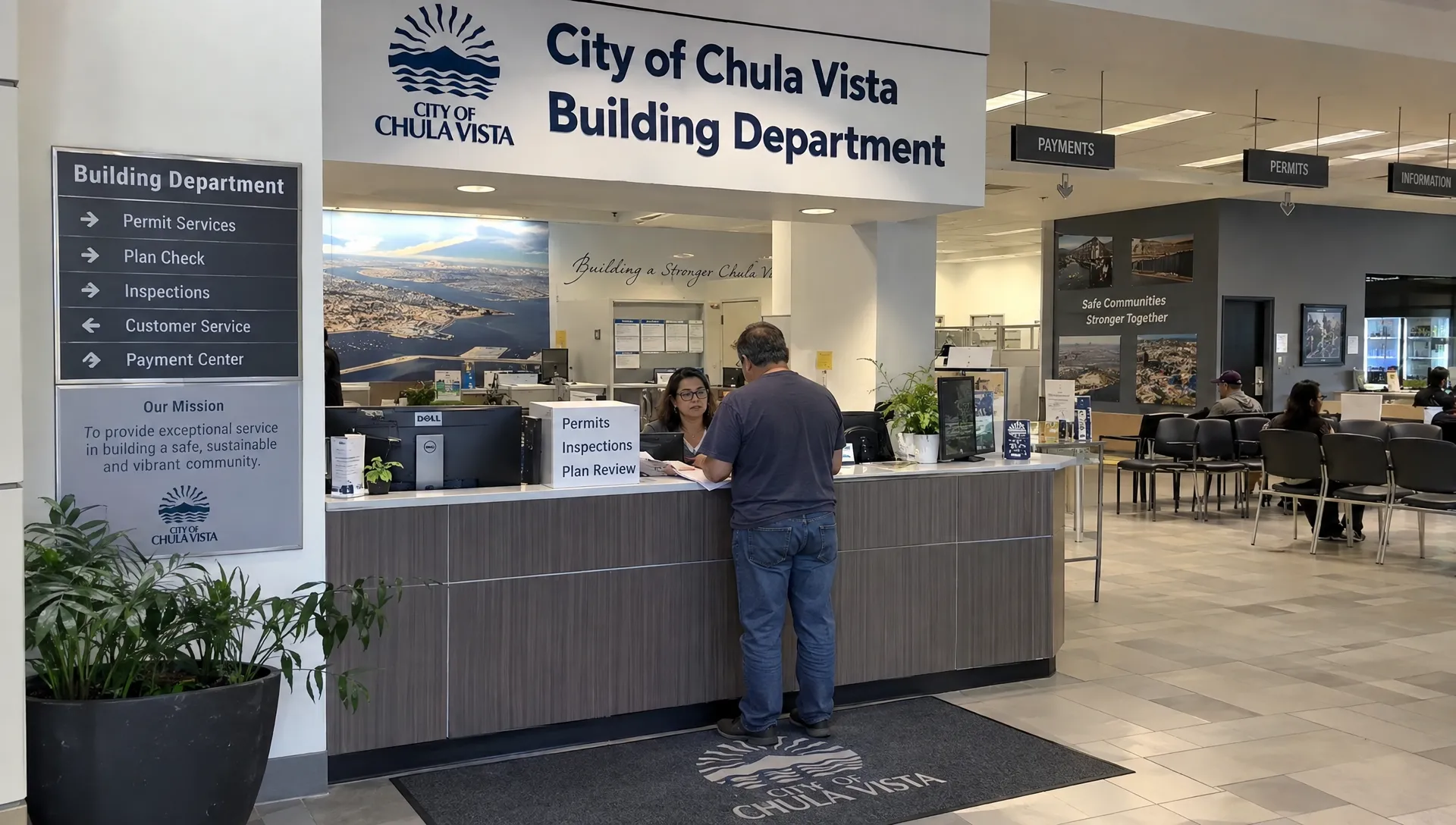
A residential plumbing repair does not automatically require a permit, but calling a job a “repair” does not make it exempt. Clearing a clogged drain or replacing a faucet washer is different from replacing a water heater, rerouting a drain or opening a wall to replace damaged piping. For homeowners in Chula Vista, the deciding factors are the actual scope of work and the rules of the building department responsible for the property.
Before work begins, confirm whether a permit is required, who will obtain it and which inspections must happen before anything is covered.
What counts as a routine plumbing repair?
Minor maintenance often falls outside permit requirements when it leaves the existing plumbing system essentially unchanged. Examples commonly include clearing a blockage without replacing pipe, repairing a dripping faucet or replacing an internal toilet component.
The distinction is between servicing a working arrangement and altering the system itself. A plumber might initially expect to clear a slow drain, then discover that a damaged section needs replacement. That discovery can change the permit requirements even though the original complaint has not changed.
Access alone does not settle the question. A visible pipe replacement may need approval, while a small maintenance task inside a cabinet may not. Likewise, the price of the job is not a dependable test. Ask about the work being performed rather than assuming that an inexpensive repair is exempt.
When does residential plumbing repair require a permit?
The following table is a screening guide, not a substitute for a determination from your local building department.
| Proposed work | Typical permit consideration |
|---|---|
| Clearing a drain without altering piping | Often treated as maintenance |
| Replacing a faucet washer or toilet flapper | Often treated as minor repair |
| Replacing a faucet or toilet in the same location | Local exemptions vary; confirm the exact scope |
| Replacing a water heater | Generally requires a permit, even in the same location |
| Replacing damaged water or drain piping | May require a permit, including some short replacements |
| Repiping a home or moving plumbing connections | Generally requires a permit |
| Replacing a sewer lateral | Generally requires approval; additional agency requirements may apply |
| Altering gas piping or changing fuel sources | Generally requires permits and applicable testing |
A useful question is: “Does this work qualify for a specific permit exemption?” That is more precise than asking whether a small job needs paperwork. For residential plumbing repair, the scope should describe what will be removed, installed or relocated, not simply say “fix leak.”
Water heater replacement is not just an appliance swap
Installing another water heater in the same spot can still involve safety requirements for venting, combustion air, earthquake restraint, electrical connections and temperature-and-pressure relief discharge piping, depending on the equipment.
A conversion can expand the scope further. Switching from a gas storage heater to a heat pump model may involve electrical work and condensate drainage. Moving to a tankless unit may require evaluating gas capacity and venting.
Ask which permits cover the proposed installation and whether another trade needs to participate. A repair to an existing heater and replacement of the entire unit should not be treated as interchangeable permit questions.
Pipe and sewer repairs can cross the line quickly
Stopping a leak without changing the piping is different from removing a defective section and installing new pipe. Concealed piping, buried connections and changes in material or routing can introduce inspection requirements.
For residential plumbing repair involving a sewer lateral, also establish where the work ends. Repairs on private property and work extending into a public right-of-way may involve different approvals. Trenchless methods do not automatically eliminate permitting simply because they reduce excavation.
Have the estimate identify the repair boundaries, proposed method and any work near a sidewalk or street. Otherwise, a homeowner may approve a private-property repair without realizing that another authorization is needed for the full project.
Moving fixtures or changing gas piping adds complexity
Relocating a sink, toilet or shower can affect drainage slope, venting and water distribution. Even a short move can turn a fixture replacement into a plumbing alteration.
Gas work deserves separate attention. Moving a gas connection, altering piping or adding equipment can require permits and testing beyond the water-side repair. Do not assume one plumbing approval covers every related electrical, mechanical or building change.
If the project also changes walls, structural framing or room use, ask the building department whether additional permits or plans are required. Define the complete project before deciding which approvals apply.
Which authority makes the decision in Chula Vista?
Start with the property's jurisdiction. An address within the City of Chula Vista generally falls under city permitting, while an unincorporated San Diego County property follows the county's process. A mailing address alone is not always enough to establish jurisdiction.
The City of Chula Vista Development Services Department is the appropriate starting point for city permit guidance. Provide the address, a short description of the proposed work and whether piping, equipment location or fuel connections will change.
For residential plumbing repair in a condo, association approval is a separate issue from a city permit. Shared piping, access through another unit and responsibility for restoration can all affect scheduling. Hydro Hero Plumbing's guide to choosing plumbing services for a condo explains those coordination issues.
Permit-exempt work must still meet applicable code requirements. An HOA's approval does not replace a required permit, and a permit does not resolve private ownership or association obligations.
Put permit responsibilities in the written estimate
Identify who applies and what the price includes
Before approving the project, request a written scope that identifies the affected fixtures or piping, materials and repair limits. The estimate should say whether permit fees, application work and inspection coordination are included or excluded.
Also establish who will be listed as the permit holder. Do not casually agree to an owner-builder arrangement simply to avoid paperwork. Homeowners who obtain their own permits take on responsibilities they should understand before applying.
For residential plumbing repair performed by a contractor, verify the appropriate license and current status through the California Contractors State License Board's license lookup. A contractor license and a project permit serve different purposes; having one does not eliminate the need for the other.
Schedule inspections before closing walls or trenches
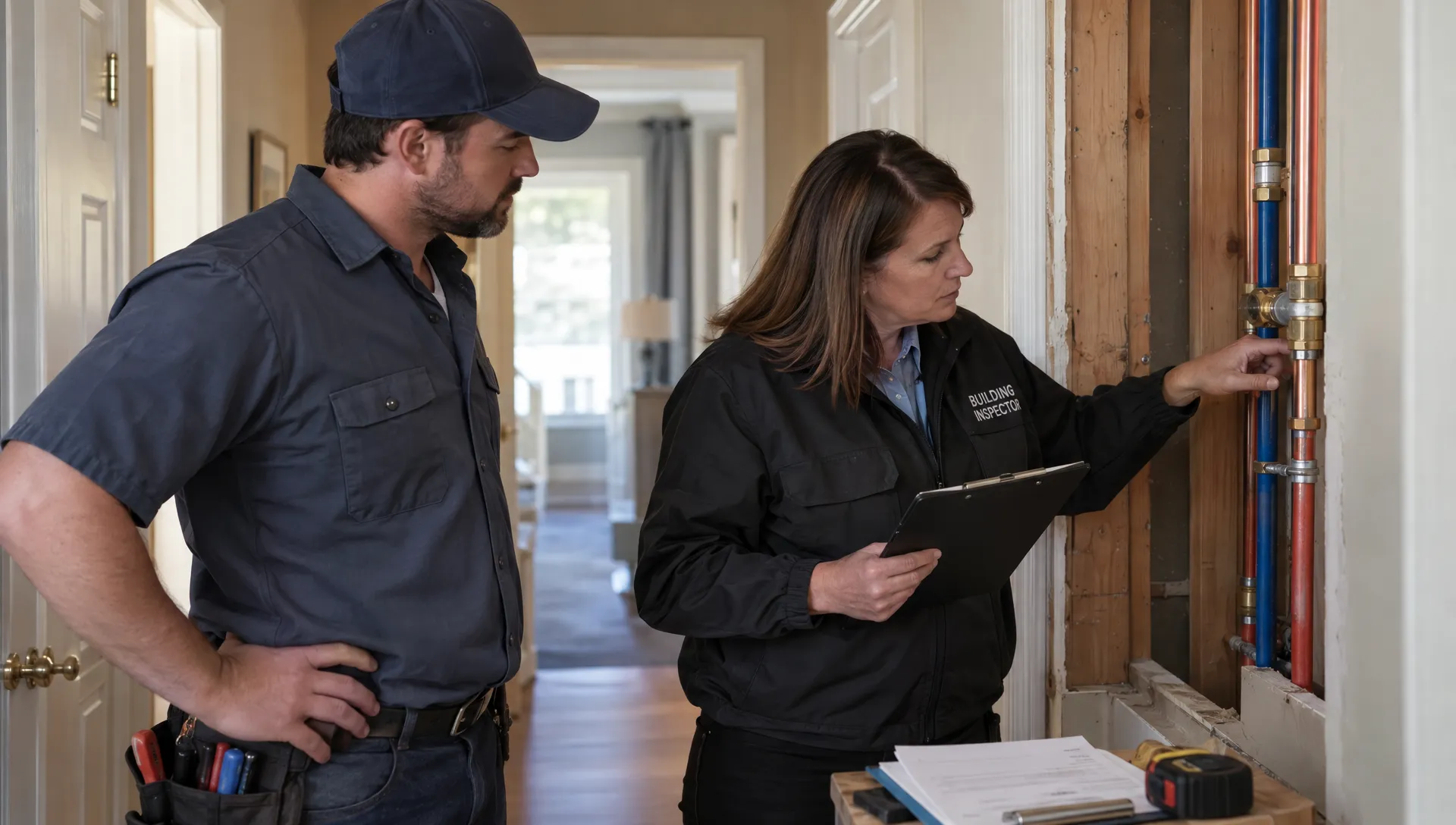
Ask which inspections the proposed work will require and what must remain accessible. Depending on the project, the inspector may need to see exposed piping, connections or required testing before approving concealment.
This matters when several trades are involved. A drywall installer should not arrive to close a wall before the plumbing inspection is complete. Similarly, excavation and inspection schedules should be coordinated before a trench is backfilled, with the site kept safely protected while open.
Clarify who will meet the inspector, arrange access and handle corrections. If an inspection identifies a problem, establish how the contractor will document the correction and request another inspection.
A permit being issued is not the same as the completed installation being approved. Build both stages into the schedule rather than treating the permit application as the last administrative step.
Keep final approval with your repair records
At completion, request the permit number, applicable inspection results and confirmation that required final approval has been recorded. Save those documents with the invoice, photographs and equipment information.
For residential plumbing repair, this record can help explain what was replaced and whether the permitted scope was completed. It may also be useful when questions arise during a later renovation or property sale.
Keep warranty documents separately as well. An approved inspection is not a promise that a component will never fail, and a contractor's warranty does not replace inspection approval. Review what plumbing repair warranties should cover so the paperwork addresses workmanship, parts and exclusions clearly.
What if the repair is an emergency?
An active leak should not be left running while you research permit forms. If it is safe, close the affected fixture's shutoff valve or the home's main water shutoff. Avoid standing water near electrical equipment and do not touch a wet electrical panel.
Contact a plumber to stabilize the situation, then have the contractor clarify the building department's emergency-work procedure. An emergency does not automatically erase permit requirements. Required applications, inspections and documentation still need to be addressed under the jurisdiction's rules.
Distinguish immediate damage control from permanent reconstruction. Stopping the water and making the area safe may happen before the full replacement scope is established.
If you smell gas, leave the building without operating electrical switches and call the gas utility or 911 from a safe location. Do not attempt to locate or repair the leak yourself.
Plan for household disruption while approvals are pending
A residential plumbing repair that requires inspections may involve more than one visit. Ask when water will be unavailable, whether a toilet will remain usable and when walls or floors can be restored. Households with children, older adults or medical needs should discuss those constraints before scheduling.
Prolonged displacement can also interrupt existing healthcare. If stress or disrupted appointments becomes a concern, contact the treating clinician. Practices such as New York-based Dr. Iospa Psychiatry Consulting offer in-person and telehealth psychiatric and psychological care; patients should confirm treatment availability for their location.
For the plumbing project itself, request a clear update whenever an inspection, correction or parts delay changes the expected outage. A realistic schedule is more useful than a completion promise that ignores required approvals.
Frequently asked questions
Does replacing a toilet require a permit? A same-location replacement may qualify for a local exemption, but requirements vary. Moving the toilet, changing the drain connection or repairing damaged piping can change the answer. Confirm the actual work with the building department.
Can a homeowner pull a plumbing permit? Some homeowners can obtain permits under owner-builder rules, subject to eligibility and local requirements. Understand the responsibilities before applying, especially if a contractor will perform the work. Ask the department how the permit should be issued for your arrangement.
What happens if residential plumbing repair was completed without a required permit? Contact the building department about the process for bringing the work into compliance. It may require an application, inspection, exposure of concealed work or corrections. Do not assume an invoice or photographs alone will establish approval.
Will one repair require the entire house to meet current code? Not automatically. Requirements depend on the scope, affected systems and conditions discovered. Ask the contractor and building department which upgrades apply to this project rather than accepting a blanket claim that everything must be replaced.
How much does a plumbing permit cost? Fees depend on the jurisdiction and work involved. Request a project-specific breakdown and distinguish government fees from contractor charges for applications, coordination or additional inspection visits.
Get a clear scope before authorizing work
Hydro Hero Plumbing provides residential plumbing services across Chula Vista and San Diego County, including leak detection, water heater work and sewer repairs, with upfront pricing and free estimates.
When requesting an estimate, ask about likely permit requirements, inspection access and responsibility for final documentation. Contact Hydro Hero Plumbing or call (619) 289-0874 to discuss the repair and define the next steps before work begins.
Isaac Cruz
Owner & Master Plumber | C-36 Licensed | 20+ Years Experience
Isaac Cruz is the owner and founder of Hydro Hero Plumbing. A second-generation plumber with over 20 years of hands-on experience in Chula Vista and San Diego County, Isaac holds an active C-36 California plumbing contractor license and has personally overseen thousands of plumbing jobs throughout the South Bay. He started Hydro Hero Plumbing with one goal: to give Chula Vista homeowners an honest, reliable local plumber they could actually trust.
Call Isaac's Team: (619) 289-0874Need a Plumber in Chula Vista?
Licensed C-36, owner-operated, and upfront pricing on every job. Same-day service across Chula Vista and San Diego County.
Call (619) 289-0874