What a Water Line Repair Estimate Should Include
A low quote can leave out the work needed to finish a water line repair properly. Learn how to compare scope, diagnosis, pricing and completion requirements before you authorize a contractor.
Searching for “water line repair near me” can bring up plenty of plumbers, but the estimate tells you what you are actually buying. A useful proposal identifies the affected pipe, explains the recommended repair and states how the contractor will verify the work before final payment.
A clear scope matters more than a low total. Two bids can differ because one covers a short patch while the other replaces a deteriorated section or includes restoring the yard. Before authorizing work, make sure each contractor is quoting the same problem and the same finished result.
Identify the line and the responsibility boundary
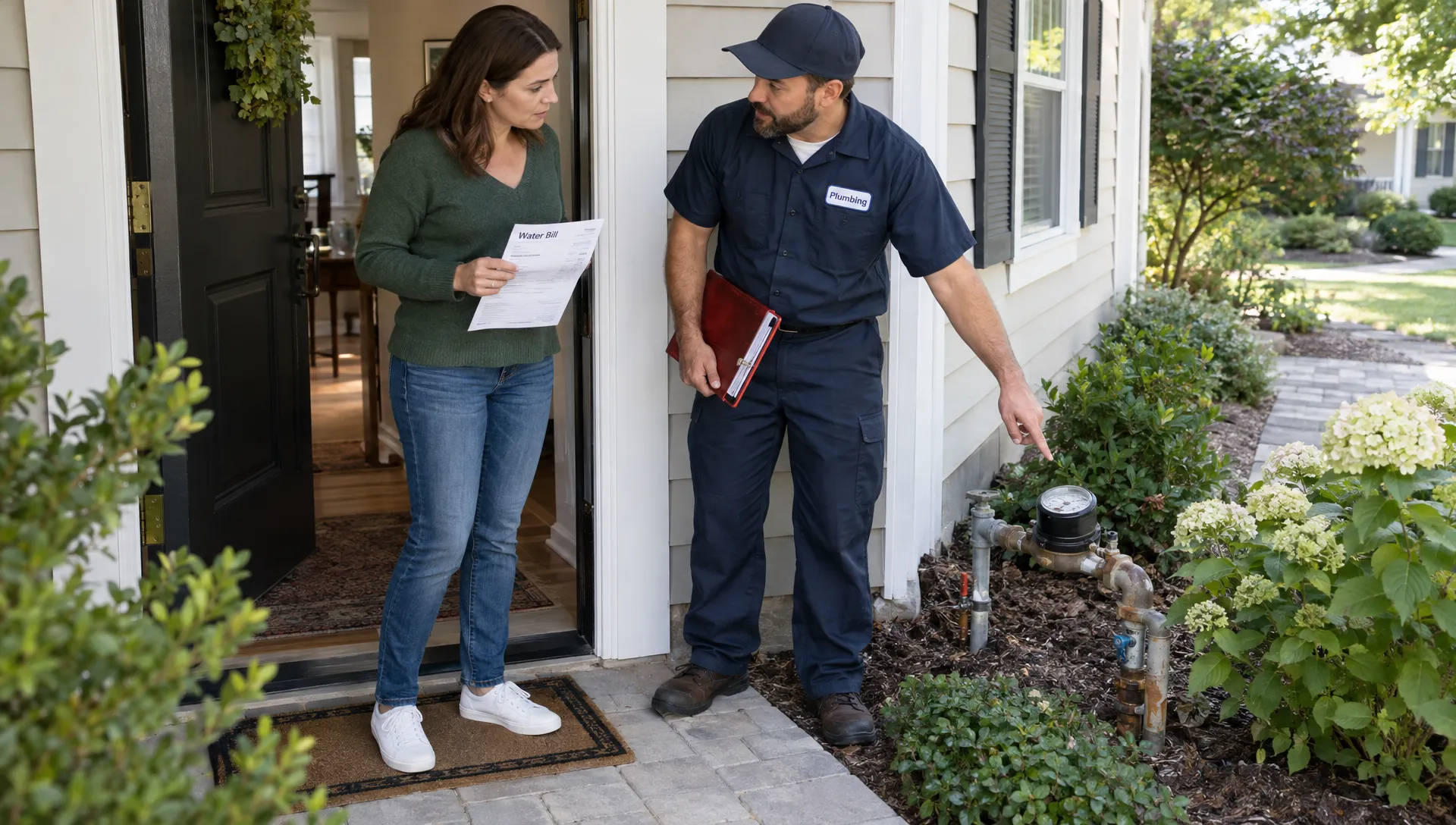
“Water line” can mean the underground service pipe supplying your property, a branch inside the building or piping beneath a slab. The estimate should identify which one needs work and describe its location in plain language.
It should also identify the proposed repair boundaries, such as from the customer-side meter connection to the house shutoff. Do not assume the property owner is responsible for every pipe near the meter. Confirm ownership and maintenance responsibilities with the water provider listed on your bill, especially around utility connections, shared services or HOA-maintained areas.
If water is actively escaping, close an accessible customer-side shutoff only if you know how and can reach it safely. Do not operate utility-owned valves or enter water near electrical equipment. Emergency stabilization and permanent repair may require separate authorizations.
What a “water line repair near me” estimate should document
A contractor should be able to turn the proposed repair into a written scope you can understand without plumbing training. Look for these core details:
- Location and endpoints: Where work starts and stops, including a sketch or marked photo when useful.
- Pipe specifications: Proposed material, diameter and relevant fittings or valves, with unknown existing conditions identified.
- Repair method: Spot repair, section replacement, full service replacement or rerouting, plus the access method.
- Included work: Excavation, installation, testing, backfill and any agreed surface restoration.
- Completion requirements: Inspections, operating checks and documents you receive before the job is closed.
“Repair leaking water line” leaves too much open. A better description identifies the section being repaired and explains what remains in service afterward.
Ask whether the document is a preliminary budget, a diagnosis-only authorization or a repair proposal ready for approval. These serve different purposes. A free estimate does not automatically mean every investigative service is included at no charge, so confirm that distinction before scheduling exploratory work.
Expect a diagnosis, not just a proposed repair
A useful “water line repair near me” estimate connects the recommended work to evidence. That may include visible leakage, meter observations with fixtures off, pressure measurements or findings from electronic leak detection.
The contractor should explain what has been confirmed and what remains uncertain. For example, detecting a probable leak beneath concrete does not necessarily establish the exact condition of every nearby pipe or connection.
Ask for the suspected location, the basis for that conclusion and whether further investigation could change the scope. Photos and marked locations make the explanation easier to evaluate, particularly when comparing proposals from different contractors.
Separate leak location from excavation planning
Finding a leak and identifying nearby buried utilities are different tasks. The estimate should explain who coordinates required utility locating before excavation and whether private buried lines need separate attention.
Similarly, a sewer camera inspection is not a substitute for diagnosing a pressurized drinking-water line. If a diagnostic charge appears in the proposal, ask what system is being inspected, what the service can establish and what information you will receive afterward.
Require a reason for repair versus replacement
The estimate should explain why the proposed approach fits the pipe’s condition. A spot repair may make sense for isolated damage to otherwise serviceable piping. Repeated leaks, widespread deterioration or several failing connections may justify replacing a longer section.
When comparing “water line repair near me” proposals, ask each contractor to describe the expected limitations of the chosen approach. Fixing one leak does not make the remaining older pipe new, and a responsible estimate should not imply otherwise.
For piping beneath a slab, distinguish direct access through the floor from rerouting around the affected section. If rerouting is proposed, the scope should address the new path, accessible shutoffs and how the abandoned section will be disconnected.
Describe access without promising a damage-free job
Open-trench and trenchless approaches have different access requirements. Trenchless work can still require entry and exit excavations, connection access or adjustments around existing utilities.
The proposal should identify anticipated openings in soil, concrete, flooring or walls. It should also distinguish basic backfill from finished restoration. Replacing a concrete section is not the same commitment as matching an existing decorative finish, landscaping or mature planting.
Make the price structure understandable
A “water line repair near me” estimate should show how the scope becomes a price. A contractor may quote a fixed total rather than itemize every fitting, but the document should still explain inclusions, allowances and conditions that could change the amount.
| Estimate component | What should be clear |
|---|---|
| Diagnosis | Whether investigation is included, separately charged or credited toward repair |
| Access and installation | Which excavation, pipe work, connections and equipment the price covers |
| Permits and inspections | Who obtains approvals, pays fees and schedules required inspections |
| Restoration | The surfaces and finishes being restored, plus any stated limits |
| Uncertain quantities | Any allowance or unit price for additional footage or other defined work |
| Payment terms | Deposit, progress payments and the event that triggers the final balance |
Require approval before additional work begins. The estimate or accompanying agreement should explain how the contractor documents a changed condition, presents the revised price and obtains your authorization. A verbal warning that “it could cost more” is not a useful change-order process.
Permit requirements depend on the scope and jurisdiction. Ask for a written statement of whether a permit is required and who is responsible for it. Hydro Hero’s guide to when residential plumbing work requires a permit explains why replacement or rerouting deserves a different review from routine maintenance.
Include the outage plan and site coordination
The estimate should provide an anticipated schedule, expected water-off period and an explanation of what could delay restoration of service. An excavation start date is not necessarily the date the property will have normal water service again.
For occupied homes, clarify access requirements and whether anyone must be present. For rentals and commercial properties, identify who notifies occupants, authorizes access and coordinates any temporary water arrangements. Those arrangements should not be assumed to be included.
A commercial leak can also affect equipment outside the plumber’s scope. If water threatens a networking closet or server room, keep staff away from wet electrical equipment and coordinate with electrical and technology providers. A Southern California managed IT provider can help plan network continuity and backup recovery, while the plumbing contractor handles the water line.
The practical question behind a “water line repair near me” search is often how soon normal use can resume. Ask for the sequence: access, repair, testing, required inspection, backfill and restoration. Knowing which steps depend on third parties helps you evaluate a completion promise realistically.
Define testing and final acceptance before work starts
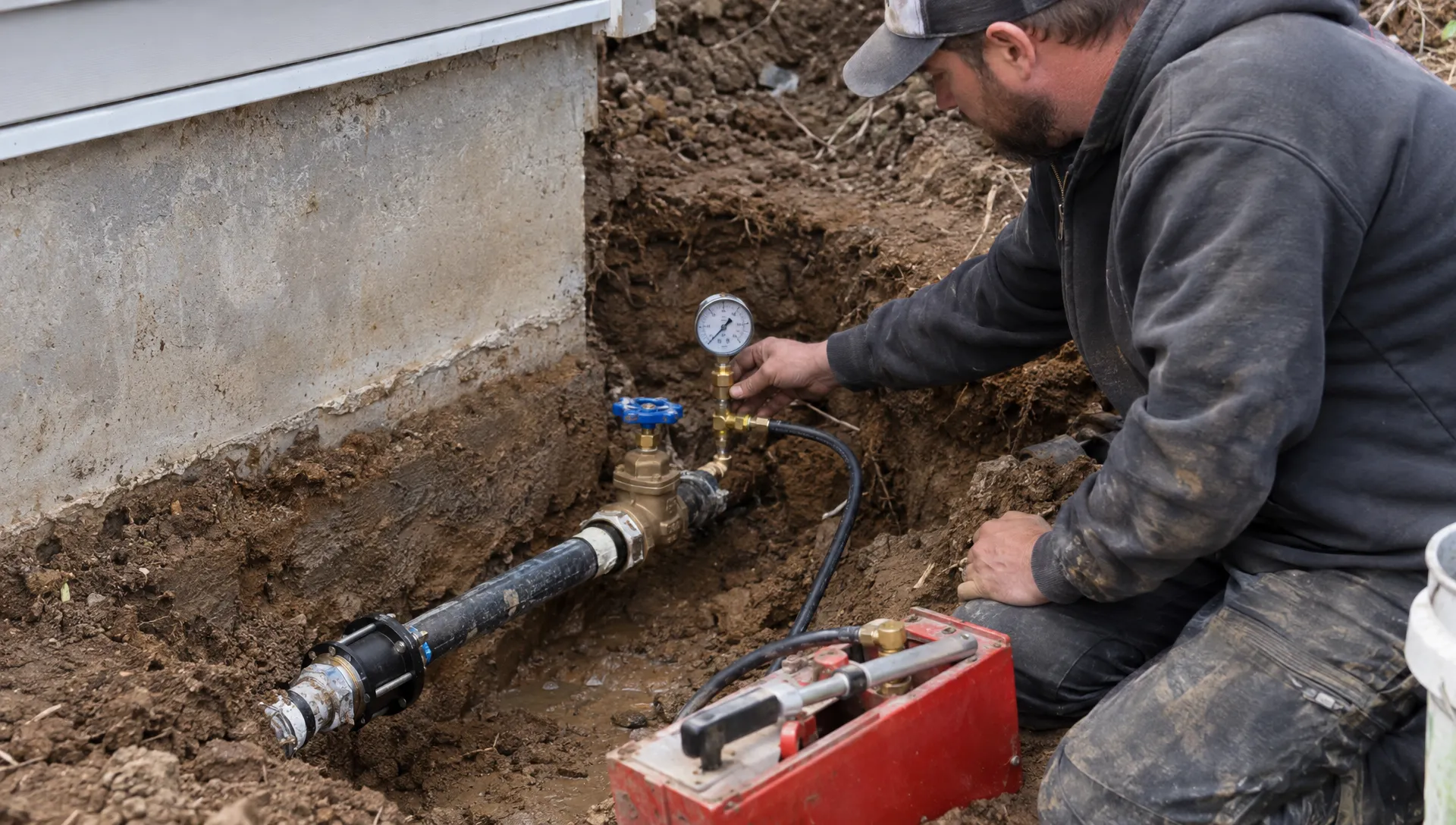
A repaired pipe should not disappear beneath soil or concrete without an agreed verification process. The estimate should describe the checks appropriate to the repair and any inspection requirements before concealment.
Depending on the work and applicable requirements, completion may involve a pressure or leak test, flushing and additional disinfection or water-quality steps. Ask the contractor to identify what applies rather than assuming every repair needs the same procedure.
The final walkthrough should confirm that the repaired section is operating, required inspections are complete and the agreed restoration has been addressed. For replaced or rerouted underground piping, request photos or a simple record of the new route before it is covered.
Put warranty coverage in writing
For any “water line repair near me” proposal, distinguish the contractor’s workmanship warranty from a manufacturer’s material warranty. Identify the covered repair, coverage period, exclusions and procedure for requesting service.
Hydro Hero’s explanation of what plumbing repair warranties should cover provides a closer look at labor, callback charges and other terms worth clarifying. Do not assume a repair warranty covers untouched piping, future leaks elsewhere or every cost of reopening a finished surface.
Compare bids using the same repair boundaries
Before comparing totals, place the proposals side by side and check their endpoints, pipe specifications, access methods and restoration commitments. If those differ, ask for clarification or a revised option before deciding which bid offers better value.
A lower-priced spot repair and a longer replacement are not interchangeable purchases. The comparison should account for what each leaves untouched, how much disruption it creates and what conditions remain uncertain.
When reviewing contractors found through “water line repair near me,” verify the business identity and license rather than relying only on search placement or reviews. California’s CSLB license lookup lets you check license status and classification. Ask for evidence of insurance as well.
Finally, check that the contractor’s name, license number, job address, estimate date and acceptance terms are present. Keep the approved scope, later change orders, inspection records and final invoice together. These documents establish what was authorized and what was delivered.
Frequently asked questions
How much should water line repair cost? A useful price depends on the affected length, depth, material, access and required restoration. A visible connection repair is a different job from replacing a buried service beneath a driveway. Get a site-specific written scope before treating any advertised price as comparable.
Should I get multiple estimates for water line repair near me? Comparing written proposals can help when the situation allows, especially for replacement or rerouting. For an active leak, first authorize only the stabilization needed to limit damage, then clarify the scope and price of permanent work.
Can the estimate change after excavation? Yes, concealed conditions can reveal additional damage or access problems. The agreement should explain how revised work is documented and approved before the contractor proceeds beyond the authorized scope.
Does an estimate include yard and concrete repairs? Only if the written scope says so. Confirm whether the contractor provides backfill alone, basic surface replacement or finished restoration, and identify any work assigned to another contractor.
Request an estimate you can evaluate
Hydro Hero Plumbing provides leak detection and plumbing repairs across Chula Vista and San Diego County, with upfront pricing and free estimates. Call (619) 289-0874 or contact Hydro Hero Plumbing to discuss the affected line and arrange an estimate.
Before approving the work, ask for the repair boundaries, price conditions, outage plan and completion checks in writing. Those details make the proposal useful, not just the number at the bottom.
Isaac Cruz
Owner & Master Plumber | C-36 Licensed | 20+ Years Experience
Isaac Cruz is the owner and founder of Hydro Hero Plumbing. A second-generation plumber with over 20 years of hands-on experience in Chula Vista and San Diego County, Isaac holds an active C-36 California plumbing contractor license and has personally overseen thousands of plumbing jobs throughout the South Bay. He started Hydro Hero Plumbing with one goal: to give Chula Vista homeowners an honest, reliable local plumber they could actually trust.
Call Isaac's Team: (619) 289-0874Need a Plumber in Chula Vista?
Licensed C-36, owner-operated, and upfront pricing on every job. Same-day service across Chula Vista and San Diego County.
Call (619) 289-0874